Dead Time Was Good for You: What We Lost When the Waiting Room Got Optimized
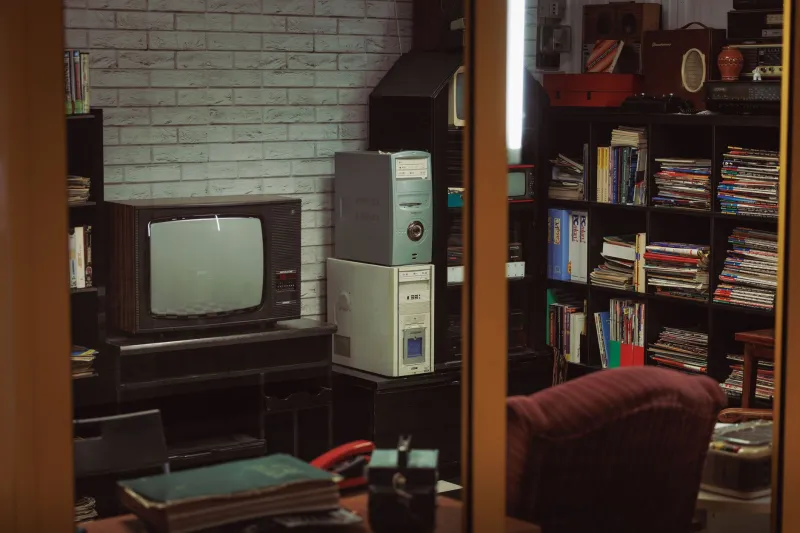
Somewhere around 2015, the American waiting room started disappearing. Not the physical space — those still exist — but the experience of waiting in one. The boredom. The idle flipping through a dog-eared copy of People magazine from four months ago. The accidental conversation with a stranger about the weather, or their hip replacement, or the parking situation outside.
That version of the doctor's office is almost gone. And we barely noticed it leave.
What the Old Waiting Room Actually Was
For most of the 20th century, the doctor's waiting room was a particular kind of American institution. You showed up, you gave your name to a receptionist behind a sliding glass window, you took a seat in a row of chairs, and then you waited. Sometimes for fifteen minutes. Often for forty-five. Occasionally for what felt like the better part of an afternoon.
The magazines were always old. The chairs were always slightly too upright. There was usually a fish tank, or a stack of wooden puzzles for kids, or a television mounted in the corner playing a local news channel with the volume too low to follow. And you just... sat there.
You thought about things. You listened to the muffled sounds coming from behind the door. You made eye contact with the person across from you and exchanged the universal look that said yeah, I know, it's a lot. You existed, quietly, in a shared space with strangers, all of you temporarily removed from the demands of your actual life.
It wasn't comfortable. Nobody called it pleasant. But it was something.
The Optimization of the Appointment
Today's medical waiting experience has been almost entirely re-engineered. You get a text reminder the day before. Then another one the morning of. You check in through an app, or at a touchscreen kiosk, or by scanning a QR code that takes you to a portal where you update your insurance information for the third time this year. You might get a text telling you the doctor is running fifteen minutes behind — which means you can wait in your car, or grab a coffee, or simply not be there until your slot opens up.
The logic is completely reasonable. Nobody likes wasting time. Clinics want efficient patient flow. Patients have jobs, kids, and limited lunch breaks. The friction of the old system was real, and reducing it seems like an obvious improvement.
But here's the thing: the friction was doing something.
When Boredom Was a Feature, Not a Bug
Researchers who study attention and mental health have spent years building a case for what most of us used to know instinctively — that unstructured, unstimulating time is actually important for the brain. It's when we process things. Work through worries. Let thoughts settle. The psychological term is "default mode network" activation, but your grandmother would have just called it sitting quietly for a minute.
The waiting room, for all its tedium, was one of the last places in American life where you were more or less required to do nothing. You couldn't really work. Your phone existed, but scrolling through it in a doctor's office in 1994 was not an option. You were just there, with your thoughts, waiting.
For a lot of people, that forty-five minutes was genuinely the most mentally unoccupied stretch of their week. Which sounds awful. But mental health professionals will tell you it's the kind of space where anxiety gets processed rather than suppressed, where decisions get quietly made, where the background noise of daily life gets a chance to quiet down.
The Small Talk We Stopped Having
There's another loss that doesn't show up in efficiency metrics: the stranger conversation.
In the old waiting room, you talked to people. Not always, not deeply, but enough. The woman next to you mentioned her grandkids. The older man with the cane told you about the construction on Route 9. A mother with a feverish toddler looked exhausted and you smiled at her in a way that meant you're doing fine. These weren't meaningful relationships. But they were human contact with people outside your usual circle — the kind of low-stakes social interaction that, researchers now tell us, contributes quietly but genuinely to our sense of community and wellbeing.
When you wait in your car and walk in three minutes before your slot, you skip all of that. The waiting room becomes a brief transit zone rather than a shared experience. The strangers stay strangers.
Progress That Costs Something
None of this is an argument against scheduling apps or text reminders or reducing unnecessary wait times. Those things are legitimately better. Sitting for an hour because a clinic was badly organized was never good for anyone.
But there's a pattern worth noticing. Across American life, we've systematically eliminated dead time — the gaps, the pauses, the unscheduled moments where nothing in particular was happening. We filled the commute with podcasts. We filled the line at the grocery store with our phones. We filled the waiting room with appointment management systems and check-in portals.
And with each elimination, we lost a small piece of something that wasn't on the optimization checklist: the capacity to just be somewhere, doing nothing, without it feeling like a problem to solve.
Your grandmother didn't need a mindfulness app. She had a waiting room and a three-month-old issue of Good Housekeeping. It turns out that might have been enough.
What We're Left With
The modern medical visit is faster, more coordinated, and in many ways more respectful of your time. But it's also more transactional. You arrive, you are processed, you leave. The accidental human moments that used to pad the experience have been quietly engineered out.
Maybe that's fine. Maybe the waiting room was never really the point.
Or maybe we're only now starting to understand what it meant to have a place in our week where the only thing asked of us was patience — and we gave it away without realizing it had value.