The Whole Neighborhood Was Your Backyard: When Kids Disappeared Outside and Nobody Panicked
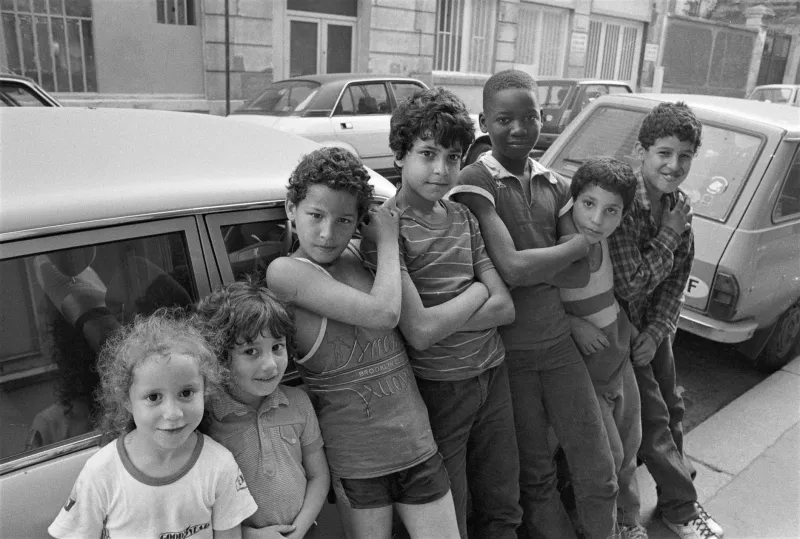
Ask anyone who grew up in America between the 1960s and the mid-1980s to describe their childhood summers, and you'll hear a version of the same story. You left the house. You found other kids. You built something, broke something, argued about the rules of a game you made up twenty minutes ago, got scraped up, and came home when the light changed. Nobody tracked you. Nobody scheduled you. Nobody required a permission slip.
That version of childhood is essentially gone. And the replacement — organized, supervised, liability-managed, and largely indoors — is different in ways that go far beyond nostalgia.
What Unstructured Actually Looked Like
It's easy to romanticize the past, so it's worth being specific. Unstructured outdoor play in the postwar decades wasn't idyllic in every way. Kids got hurt. They got into trouble. They occasionally did genuinely dangerous things. But the operative word is unstructured — meaning the children themselves were the architects of their time.
Research on childhood play from that era consistently finds that kids in the 1970s spent significantly more time in unsupervised outdoor activity than children today. A landmark study by Peter Gray at Boston College found that free play among American children declined by roughly 25 percent between 1981 and 1997 — and the trend has continued steadily since. Time spent in organized activities doubled over the same period.
The neighborhood was the infrastructure. A kid on a bike could cover several blocks in any direction, encounter other kids doing the same thing, and form a temporary society with its own rules, hierarchies, and conflicts. This wasn't just fun. It was, according to developmental psychologists, the primary mechanism through which children learn to negotiate, manage frustration, assess risk, and develop autonomy.
When the Fear Arrived
The shift didn't happen all at once. It accelerated in the 1980s, driven by a confluence of factors that felt urgent at the time and look somewhat different in retrospect.
High-profile child abduction cases — particularly the disappearance of Adam Walsh in 1981 — generated intense media coverage and a national conversation about child safety that fundamentally altered how American parents thought about unsupervised kids. Milk carton campaigns, stranger danger education in schools, and round-the-clock news cycles created a perception that predatory danger lurked everywhere.
The statistical reality was more complicated. Child abduction by strangers, while genuinely horrific, was and remains statistically rare. Children are far more likely to be harmed by someone they know. But perception doesn't follow statistics, and by the late 1980s, the cultural consensus had shifted: leaving children unsupervised outdoors was no longer seen as normal parenting. It was beginning to look like negligence.
Legal liability reinforced the cultural shift. Neighborhoods that once had open lots and informal gathering spaces started posting signs. Schools pulled back recess time and removed playground equipment that presented injury risk. Parents who let their kids roam began to worry not just about strangers but about what other parents would think — and occasionally, what authorities might say.
The Rise of the Scheduled Child
Into the vacuum left by unstructured time came organized activities. Youth sports leagues expanded dramatically through the 1990s and 2000s. Soccer, baseball, swimming, gymnastics — activities that previous generations pursued informally became structured programs with coaches, schedules, registration fees, and competitive brackets for eight-year-olds.
By 2014, the American Academy of Pediatrics was publishing formal guidance urging pediatricians to prescribe free play as a health intervention — which is a remarkable sentence when you think about it. A basic feature of human childhood had become something doctors needed to recommend.
The economics of scheduled childhood are worth noting too. Organized youth sports in the United States is now a roughly $19 billion industry. Travel teams, private coaching, tournament entry fees, specialized equipment — families routinely spend $3,000 to $10,000 per year, per child, on competitive youth athletics. The kids who play are often getting tremendous athletic development. But the spontaneous, self-directed physical activity that used to happen for free in every cul-de-sac in America has been partially replaced by a product you have to purchase.
What the Research Says We Lost
Developmental science has been fairly consistent on this point: unstructured play is not a luxury or a reward for finishing homework. It is a developmental necessity.
Peter Gray's research, along with work by Stuart Brown at the National Institute for Play, identifies free play as the primary context in which children develop executive function — the ability to plan, regulate emotions, and adapt to unexpected situations. When children make up their own games, they practice rule-making, negotiation, and conflict resolution in real time. When an adult structures the activity, those lessons are largely handed to them pre-packaged.
The psychological data on American children since the 1980s is sobering. Rates of anxiety, depression, and what researchers call "external locus of control" — the sense that outside forces, rather than one's own actions, determine outcomes — have risen steadily across the same decades that free play declined. Correlation is not causation, and multiple factors are obviously at work. But the timing is hard to ignore.
Physical health tells a parallel story. Childhood obesity rates in the US began climbing sharply in the 1980s. The percentage of children meeting recommended daily physical activity guidelines has dropped significantly. Screen time fills hours that were once spent moving, but even before screens became dominant, the shift away from outdoor play had already begun.
What We Gained, and What It Cost
This isn't a simple good-old-days argument. Some things genuinely improved. Children today are safer in measurable ways — car safety, product safety, and supervision have all contributed to lower rates of accidental childhood death. Organized sports provide access to coaching and competition that informal neighborhood games couldn't offer. Structured activities give working parents a workable framework for childcare.
But something real was traded away in the exchange. The child who spent a summer afternoon building a dam in a creek, arguing with a friend about whose idea it was, failing at it, and then figuring out a different approach — that child was doing something that no scheduled activity fully replicates.
The neighborhood isn't the same. The kids aren't outside. And the developmental work that used to happen between breakfast and the streetlights — self-directed, unsupervised, occasionally muddy — has been quietly redistributed to a calendar that leaves less and less room for figuring things out on your own.