The Lifer Badge Is Gone: Whatever Happened to Working One Job Until the Cake and the Speech?
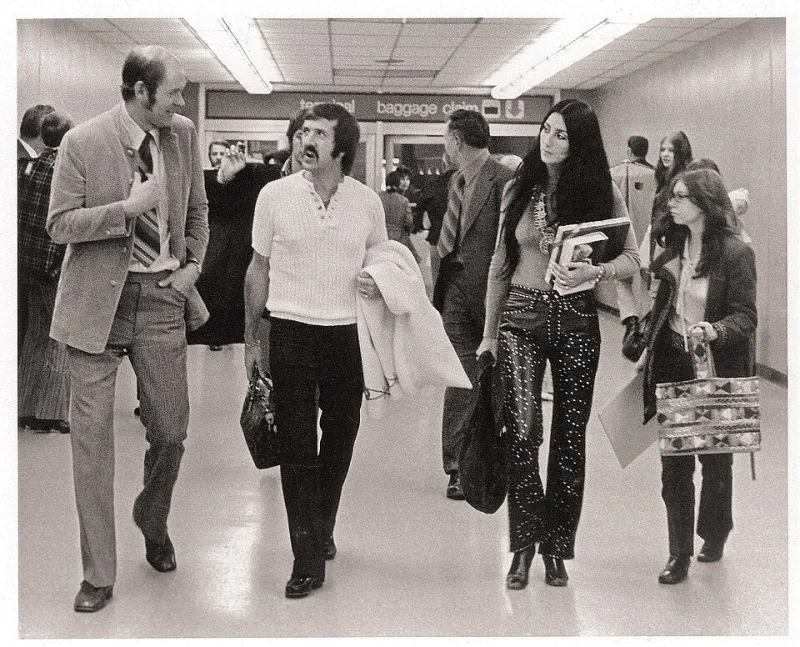
Photo: BLM Oregon & Washington, Public domain, via Wikimedia Commons
There's a photo that surfaces every so often on social media: a man in a suit, holding a cake, standing next to a banner that reads something like "40 Years of Service — Dave, General Motors." The comments are always the same. Half of them say "they don't make companies like that anymore." The other half say "they don't make employees like that anymore." Both halves are missing the point. The deal itself died.
The Deal Your Grandfather Shook On
For a stretch of American history — roughly the late 1940s through the early 1980s — the implicit contract at a big employer was simple. You show up, you work hard, you don't leave, and in exchange the company takes care of you until you die. A defined-benefit pension, health insurance, maybe a profit-sharing check at Christmas. IBM famously handed out its "lifer badges" to employees who crossed certain tenure milestones, and being a lifer was a point of pride, not an insult. At GM in its heyday, the workforce was measured in the hundreds of thousands, and whole Michigan towns organized their lives around shift changes at a single plant.
The math of that era was remarkable. A worker hired at Ford in 1955 could retire around 1990 with a pension worth 30 to 60 percent of his final salary, guaranteed for life, often with survivor benefits for his wife. He never picked a 401(k) fund. He never worried about sequence-of-returns risk. He didn't even know what those words meant, and that was the point. The company's actuaries worried so he didn't have to.
The Deal Collapsed From Both Sides
Here's where the usual telling of the story gets lazy. It's popular to say corporations gutted the pension and left workers stranded, and there's real truth in that — companies discovered that a 401(k) costs a fixed contribution while a pension is an open-ended promise that can bankrupt you if your industry shrinks. Steel learned that in the 1970s. Airlines learned it in the 2000s. But workers walked too.
By the 1990s, staying at one company had stopped being rewarded. Internal raises routinely trailed the market, and the most reliable way to boost your salary 15 to 20 percent was to quit. Job-hopping stopped being a red flag on a résumé and became a skill. Meanwhile, the average American worker today holds roughly twelve different jobs over a career, and median tenure at a single employer sits around four years — a number that keeps drifting down.
So which era won? Wrong question. We didn't trade security for freedom. We traded one bundle of risks for a completely different bundle.
What We Gained, What We're Paying
The modern portfolio career is genuinely better for a lot of people. The GM lifer was often stuck — in a town, in a role, in a marriage to an employer who could transfer him anywhere. Today you can switch industries at 40, freelance on the side, negotiate remotely, and build equity in yourself instead of in a pension fund that might be underfunded. The side hustle, whatever you think of the term, is a hedge the 1975 assembly-line worker never had.
But look at what replaced the pension: a system where you are the actuary now. You choose the funds. You decide the savings rate. You absorb every market crash five years before retirement. Financial researchers have shown that a large share of 401(k) participants either save too little, pay fees they don't understand, or panic-sell at the worst moment. The company took the risk off its books and put it on yours, and called the transfer "flexibility."
There's also the quieter cost. The lifer's identity was partly his institution. Retirement came with the cake, the speech, and a community of coworkers who'd known him for decades. Today's serial job-hopper builds a LinkedIn network instead of a break room family, and retires to a calendar he has to fill himself.
The Verdict
Neither era is coming back, so the practical question is what to do about it. If you're under 50, the pension world is effectively a museum exhibit — you are your own benefits department, whether you applied for the job or not. That means the savings rate, the fee structure, and the diversification are not optional adulting details. They're the whole ballgame.
The gold watch era asked for loyalty and paid for it in security. Our era offers freedom and pays for it in anxiety. The workers who do best today are the ones who understand the trade explicitly — and stop waiting for a cake that isn't coming.