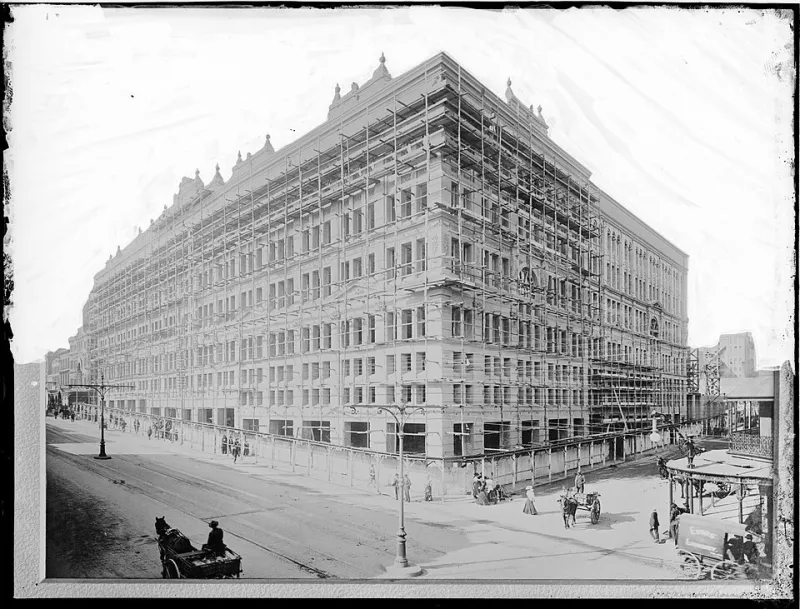
Five Floors of Everything: The Department Store Was America's Living Room — Until We Dismantled It
If you grew up in any American city or mid-sized town between the 1950s and the 1990s, you probably have a department store memory that has nothing to do with shopping. Maybe it's the smell of the perfume counter near the entrance, so thick it hit you before the doors fully opened. Maybe it's the lunch counter on the third floor where your mother ordered a chicken salad sandwich every single time without looking at the menu. Maybe it's the pneumatic tube system that whooshed your payment to some invisible cashier behind the wall, which felt like magic when you were seven.
Those memories are so specific, so sensory, and so widely shared across generations that they reveal something important: the department store wasn't just retail. It was a cultural institution. And we let it die without quite realizing what else we were burying alongside it.
The Department Store as Civic Space
At their peak — roughly the postwar era through the 1980s — American department stores functioned as something closer to public squares than to shopping destinations. Marshall Field's in Chicago. Filene's in Boston. Nordstrom in Seattle before it went national. Dillard's across the South. Hecht's, Burdines, Macy's, Sears at its height. These weren't just big stores. They were anchors — of downtowns, of malls, of communities.
You went there for a reason, but you stayed because the experience rewarded you. Department stores were designed to be browsed. Wide aisles, unhurried atmospheres, salespeople who worked specific departments for years and actually knew their merchandise. The shoe department guy had been fitting shoes since before you were born. The woman at the cosmetics counter could read your skin tone at a glance and steer you toward something that actually worked.
This was service in a form that's become almost alien: knowledgeable, patient, and not algorithmically incentivized to upsell you into the wrong size.
The Social Architecture of a Saturday Afternoon
There's a particular American ritual that has essentially vanished from family life, and it's this: the Saturday afternoon department store trip that wasn't really about buying anything specific.
Families would go downtown — or to the mall anchor — with a loose agenda. Maybe you needed new school shoes. Maybe you were looking at curtains. But the trip had a social dimension that transcended its stated purpose. You ran into people. You ate lunch in the store restaurant. You let the kids ride the escalator six times because it was free entertainment and they loved it. You tried on hats you had no intention of purchasing. You wandered.
That kind of unstructured commercial browsing served a social function that's easy to underestimate in retrospect. It was one of the ways Americans from the same town stayed casually connected — not through organized events, but through the incidental overlaps that shared public spaces create. The department store was, in its own quiet way, community infrastructure.
The Slow Unraveling
The decline didn't happen overnight. It was a long unraveling that began with the shift of retail gravity from downtowns to suburban malls in the 1970s, accelerated through the rise of big-box specialty stores in the 1980s and 90s, and then hit the wall of e-commerce in the 2000s.
Each transition made a certain kind of economic sense. Specialty stores like Gap, Best Buy, and Bed Bath & Beyond could go deeper on one category than a department store could. Why buy electronics at Sears when Circuit City had three times the selection? Why buy jeans at Macy's when the Gap was right there in the same mall and did nothing but jeans?
The department store's breadth — once its greatest strength — became its vulnerability. It was good at everything and excellent at nothing, which is a difficult position to defend when the competition is excellent at one thing and one thing only.
Then Amazon arrived, and the logic of the physical department store became nearly impossible to sustain. Why drive to a store, find parking, walk to the right floor, wait for assistance, and carry something home when you could order it in ninety seconds and have it tomorrow? On pure transactional efficiency, there's no contest.
What Efficiency Can't Deliver
But here's where the comparison gets interesting. What Amazon — or any e-commerce platform — cannot replicate is the accidental, unhurried, sensory experience of being in a well-designed physical store with no particular agenda.
You cannot stumble across something online the same way you stumble across something in a store. The algorithm shows you things it predicts you'll like, which is a fundamentally different experience from wandering past a display and noticing something unexpected. Discovery online is filtered. Discovery in a physical space is genuinely open.
And the social dimension is simply absent. You don't run into your old neighbor on Amazon. You don't share a lunch counter with strangers who live three blocks away. The transaction happens in isolation, efficiently and invisibly, and then it's over.
The Empty Anchor and What Follows
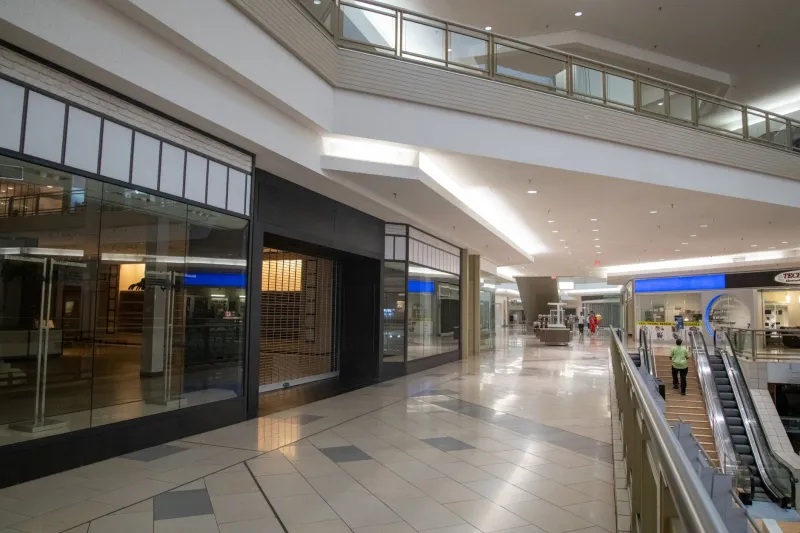
Drive past almost any regional mall in America today and there's a reasonable chance you'll see at least one former department store anchor sitting empty, its windows papered over, its parking lot cracked and faded. Some have been converted to fulfillment centers — a detail that feels almost too on-the-nose as a symbol of what replaced them.
The stores that survived — Nordstrom, a leaner Macy's, a handful of regional players — did so by moving upmarket, leaning into experience, and accepting that they'd never again be the center of American retail gravity.
What's gone is the middle: the accessible, unpretentious, multi-generational department store that served a town's worth of people across every income bracket and made them feel, for a Saturday afternoon, like they were all shopping in the same place.
We gained speed, selection, and the ability to buy anything from a couch. What we traded away was a shared room. And shared rooms, it turns out, are harder to replace than anyone thought.