Seven Digits You'd Never Forget: How Smartphones Quietly Emptied the American Mind
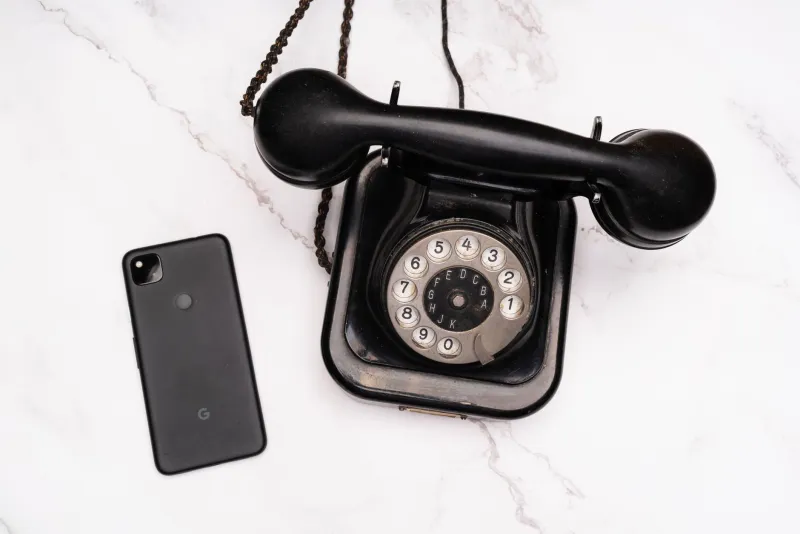
The Phone Number You Still Remember
There's a decent chance you can still recite your childhood home's phone number without thinking. Seven digits — maybe ten if you grew up in a busy metro area — burned into your brain from years of repetition. You dialed it from payphones, from friends' houses, from school offices. It was yours the way your address was yours.
Now try to recall your best friend's cell number. Or your spouse's. Or even your own work line.
For most Americans under fifty, that's suddenly a lot harder than it should be.
What Memory Actually Looked Like Before 2007
Before the iPhone changed everything, keeping track of the people in your life was a genuine cognitive exercise. A typical American adult in the 1980s or 1990s could rattle off a dozen phone numbers without hesitation — immediate family, close friends, the office, the pediatrician, maybe the local pizza place that didn't take orders online because the internet wasn't really a thing yet.
Beyond phone numbers, there were addresses memorized for birthday cards, driving directions stored as mental maps — "turn left at the Sunoco, go three lights, it's the blue house" — and appointment times held in your head because you couldn't set a reminder on a device that didn't exist.
This wasn't considered impressive. It was just ordinary adult competence.
Kids learned it early. You memorized your home number before you memorized the Pledge of Allegiance. If you got separated from your parents at a mall or a state fair, that number was your lifeline. Parents drilled it into children the way they drilled their home address — as survival knowledge.
The Rolodex, the Address Book, and the Backup System
Of course, nobody relied purely on mental recall. The Rolodex — that satisfying spinning card file that lived on every office desk — was the professional's external memory. At home, the address book sat in a kitchen drawer, updated in pencil so you could cross out numbers when people moved. The back pages of personal planners were crammed with emergency contacts.
But here's the key difference: those physical systems were supplements to memory, not replacements for it. You still knew the numbers. The book was there when you were tired, or distracted, or dealing with someone new. It wasn't there because you'd never bothered to learn the information in the first place.
That distinction matters more than it sounds.
The Moment We Stopped Trying
The shift didn't happen overnight, but it accelerated fast. Early cell phones in the late 1990s let you store a handful of contacts. Flip phones stored more. Then smartphones arrived with effectively unlimited contact lists, cloud sync, and the ability to simply search a name rather than remember anything about it.
Why memorize seven digits when your phone already knows them? The logic was airtight. The consequences were invisible — at first.
Cognitive scientists have a term for this: cognitive offloading. It's the practice of using external tools — notebooks, GPS, apps — to handle mental tasks that the brain would otherwise manage internally. Humans have always done this to some extent. Writing itself is a form of cognitive offloading. But the scale and speed at which smartphones absorbed our everyday memory functions was genuinely unprecedented.
Research from institutions including Columbia University found that people began showing reduced recall for information they believed was being saved elsewhere — a phenomenon sometimes called the "Google Effect." Why hold onto something your phone is already holding for you?
 Photo: Columbia University, via storage.googleapis.com
What We Gained (And It's Real)
Let's be honest about the upside, because it's significant. Outsourcing memory to a device has freed up mental bandwidth for things that matter more. You don't need to dedicate brain space to a dentist's phone number when that space could go toward a work problem, a creative project, or simply being present in a conversation.
GPS navigation has made it possible for people with poor spatial awareness to travel confidently in unfamiliar cities. Calendar apps have reduced the anxiety of forgotten appointments. The cognitive load of modern adult life — which is genuinely heavier than it was in 1985 — is more manageable because devices absorb the routine stuff.
That's not nothing. That's actually quite a lot.
What We Quietly Traded Away
But there's a flip side that doesn't get discussed as often.
Memory isn't just storage — it's infrastructure. The act of memorizing information builds mental habits: attention, repetition, association. When you committed a phone number to memory, you were also practicing focus. When you navigated by landmark rather than GPS, you were building a spatial model of your world that made you feel oriented and capable within it.
There's also a vulnerability that doesn't get enough airtime. A dead battery, a lost phone, or a cracked screen can now strand a person in ways that would have been inconceivable thirty years ago. Americans who grew up pre-smartphone generally had a mental fallback. Many people born after 2000 genuinely do not know their parents' phone numbers. In an emergency, that gap has real consequences.
And there's something harder to quantify but worth naming: the feeling of knowing something. Of carrying information inside you rather than in a glass rectangle in your pocket. That sense of self-reliance — of being a person who knows things — has quietly eroded, and most of us didn't notice it leaving.
Memorize One Number This Week
Nobody is suggesting we return to the Rolodex. The smartphone is not going anywhere, and it genuinely makes life easier in ways that are worth keeping.
But there's a reasonable argument for reclaiming a small piece of what we gave away. Pick one number — your partner's, your kid's school, your own cell — and memorize it. Actually memorize it. Say it out loud. Write it down a few times. Make it stick the old-fashioned way.
Not because your phone will fail you. But because some things are worth keeping in your own head.
The era when Americans trusted their brains with everyday information isn't gone — it's just been outsourced. And like most outsourcing arrangements, it comes with terms and conditions nobody fully read.