The Library Card Was a Kid's First Key to the Whole World

The Library Card Was a Kid's First Key to the Whole World
There was a ritual to it. You walked through those heavy doors, felt the temperature drop, and immediately understood that this place had rules. Quiet rules. Respectful rules. You were somewhere that mattered.
For millions of American kids growing up in the mid-twentieth century, getting a public library card wasn't just a practical errand. It was a milestone — the first time a civic institution handed you something and said, this belongs to you. No purchase required. No parent's credit card. Just your name on a card and an entire building of human knowledge suddenly available for the taking.
It's worth pausing on how remarkable that actually was.
What the Library Actually Was
For most working-class and middle-class American families, buying books was a luxury. A hardcover in the 1950s could run two or three dollars — real money when a gallon of milk cost about twenty cents. Encyclopedias, the gold standard of home reference, were sold door-to-door on installment plans and still cost families hundreds of dollars. Many households simply didn't have them.
The public library filled that gap completely. And it wasn't just books. By the 1960s and 70s, a well-funded branch library might carry vinyl record collections, 16mm films, art prints you could borrow and hang on your wall, magazines from around the country, microfilm archives of local newspapers going back decades, and reference librarians who functioned as human search engines — patient, knowledgeable, and free.
If you wanted to know something, you went to the library. If you wanted to discover something — something you didn't even know you were looking for — you also went to the library.
That second part is important.
The Serendipity Nobody Talks About
There's a specific kind of discovery that only happens when you're physically moving through a space full of things organized by someone else's logic. You go looking for a book about the Civil War and your eye catches a spine about Reconstruction. You pull it out, flip to a random page, and two hours later you've forgotten what you originally came for.
Librarians called it browsing. Algorithms would later try to replicate it with recommendation engines. They haven't quite managed it.
The library also had something that's genuinely hard to recreate digitally: the feeling that knowledge was a shared public resource. You borrowed the same copy of To Kill a Mockingbird that a hundred other people in your town had already read. Someone before you had dog-eared a page. Someone else had underlined a sentence in pencil, lightly enough that the librarian missed it. You were part of a chain.
What Replaced It — And What Didn't
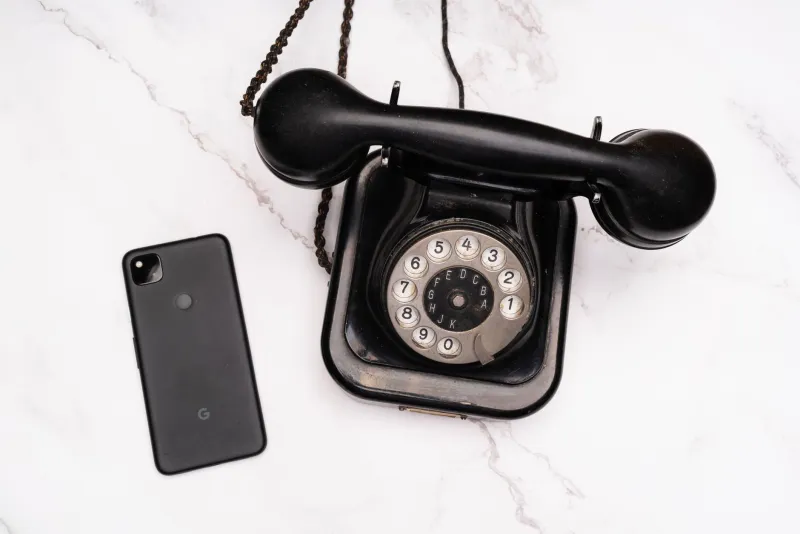
Today's numbers tell a clear story about what happened. Smartphone ownership in the United States now exceeds 90 percent among adults. A basic phone with a data plan gives any American kid access to Project Gutenberg's library of over 70,000 free books, Wikipedia's 6.7 million English-language articles, YouTube's effectively infinite video catalog, and more podcasts, audiobooks, and online courses than any single human could consume in a lifetime.
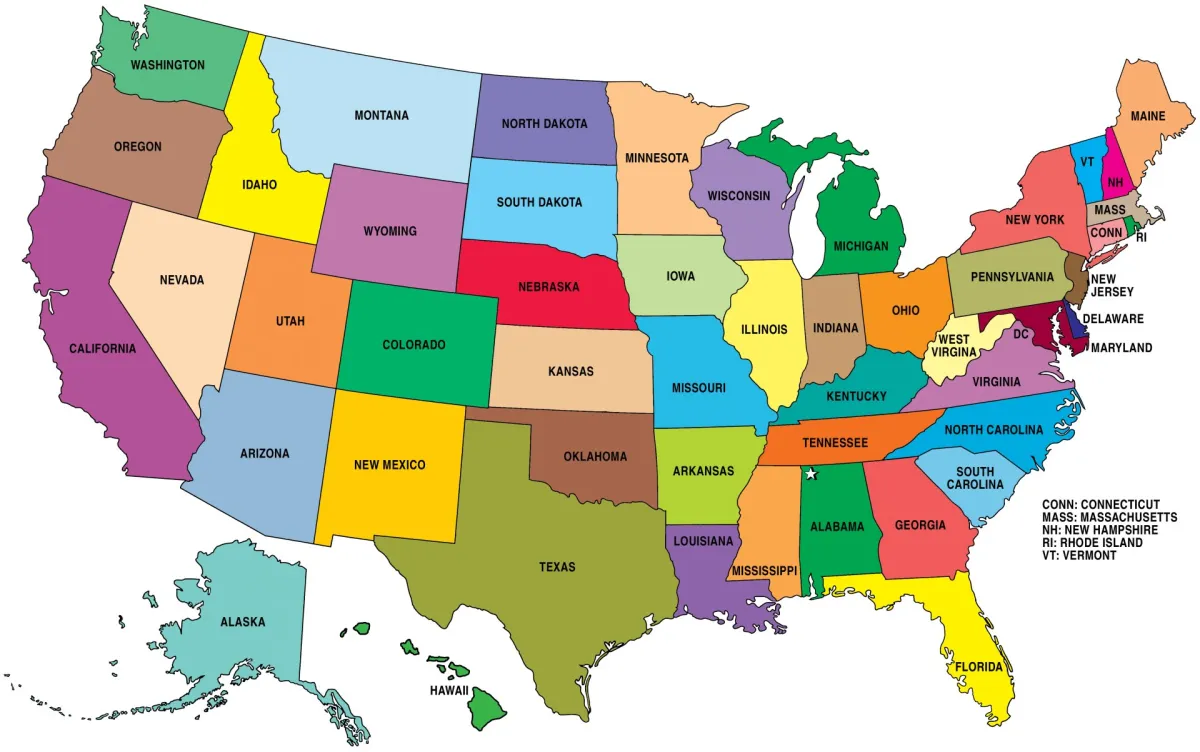 Photo: United States, via images7.alphacoders.com
 Photo: Project Gutenberg, via projekt-gutenberg.org
By raw volume, the comparison isn't even close. Your phone holds more than any library ever did.
And yet. Library visits in the U.S. peaked around 2009 and have declined since. Reading rates among children and teenagers have dropped steadily over the past two decades. A 2023 Gallup survey found that Americans are reading fewer books than at any point in the previous three decades — an average of about 12.6 books per year, down from 18 in 1999.
More access. Less reading. That's a paradox worth sitting with.
The Ritual Had Value We Didn't Invoice
Part of what's been lost is harder to quantify than checkout numbers. The library was a place with a purpose. When you walked in, your brain understood: we are here to read, to learn, to think. The environment itself was an instruction.
There was also the matter of effort. You had to go somewhere. You had to choose something physical, carry it home, return it on time or pay a fine. That friction wasn't a bug — it was a feature. Things you work slightly harder for tend to get more of your attention.
And for kids specifically, the library was often the first public space they navigated independently. You got there yourself, figured out the card catalog or the computerized system, found your section, made your choices. It was low-stakes practice for being a person in the world.
Libraries Didn't Disappear — They Adapted
To their credit, public libraries haven't stood still. Most now offer digital lending through apps like Libby, free access to streaming services, coding classes, 3D printers, seed libraries, and social services referrals. During the COVID-19 pandemic, libraries in many cities became critical community lifelines in ways that had nothing to do with books.
About 17,000 public library locations still operate across the United States. Many are genuinely thriving, particularly in communities where the digital divide means a library's free Wi-Fi and computer terminals are still someone's only internet access.
But the cultural weight of the library — the sense that it was the most important building on the block — has faded in a way that's hard to reverse.
What Kids Actually Needed
Here's the honest question: did kids in 1965 read more because the library was their only option, or because the library created an environment that made reading feel worthwhile?
Probably both. But the second factor is the one we gave up when we traded the ritual for the convenience. We told ourselves that easier access to information was the same as a richer relationship with it. The reading statistics suggest we were wrong.
A library card used to be the most equalizing object a kid could own. Rich or poor, your card got you the same books as everyone else. That democratic promise still exists in theory. Whether we've made space for it in practice is a different question entirely.