Cake, Balloons, and Twenty Kids Running Wild: The Birthday Party We Left Behind
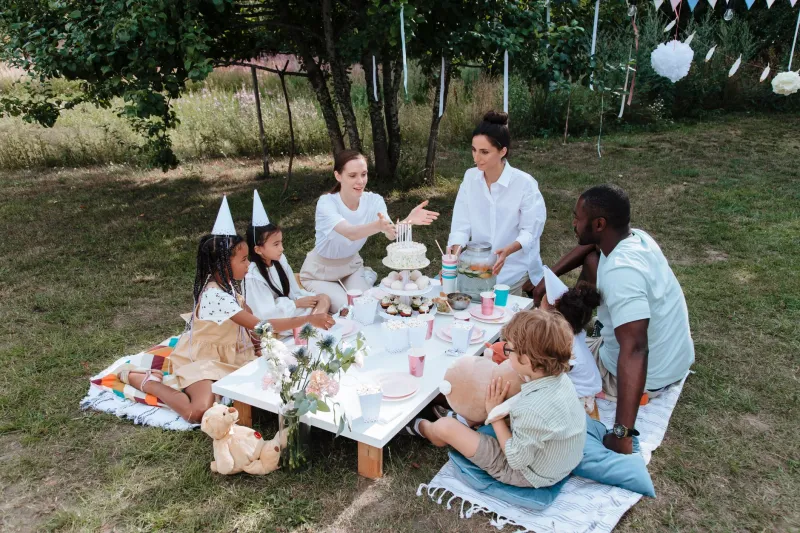
Somewhere in a shoebox in your parents' attic, there might be a photograph from your fifth or sixth birthday. Maybe you're standing behind a cake your mom made from a Betty Crocker box. There are paper plates. There are streamers taped slightly crookedly to the wall. Someone is crying in the background because they lost at musical chairs. Everyone is wearing their regular clothes.
It looks chaotic and imperfect and genuinely fun.
Now scroll through Instagram for about four minutes and find a child's birthday party from this decade. There's a balloon arch in precisely coordinated colors. A custom cake from a specialty bakery that took three weeks to order. A rented backdrop for photos. A party favor bag for every child that cost more than the average 1965 gift. And somewhere in the caption, a hashtag that indicates this is a Moana-themed experience, not merely a birthday party.
Something changed. Quite a lot, actually.
What the Mid-Century Party Actually Looked Like
American children's birthday parties in the 1950s and 60s were neighborhood events in the most literal sense. The guest list was whoever lived on your block and whoever your kid went to school with. Invitations were often delivered by hand — or just shouted over a fence. Parents didn't RSVP with dietary restrictions.
The food was homemade almost by default. A frosted layer cake, a bowl of potato chips, maybe Hawaiian Punch in a big glass bowl with sherbet floating in it. The games were classics that required nothing but children and a small amount of adult supervision: Pin the Tail on the Donkey, Duck Duck Goose, a three-legged race in the backyard. Prizes were small — a piece of candy, a plastic trinket.
Gifts were modest. A coloring book. A small toy from the local five-and-dime. A book. Nobody spent more than a dollar or two, and nobody expected them to. The birthday child was thrilled regardless, because the alternative was no party at all.
Total cost for the whole event? Adjusted for inflation, probably somewhere between $30 and $60 in today's dollars. Often less.
The Slow Escalation
The shift didn't happen overnight. It was a gradual ratcheting-up of expectations that accelerated in roughly three distinct phases.
The first was the commercialization of childhood in the 1980s, when licensed characters exploded across every consumer category. Suddenly a birthday party wasn't just a birthday party — it was a Strawberry Shortcake party or a Ghostbusters party, and the themed plates, napkins, tablecloths, and balloons were all available at Party City for a price. The party supply industry grew up alongside the kids.
The second phase was the rise of the venue party in the 1990s and 2000s. Chuck E. Cheese had existed since the late 70s, but the model expanded dramatically — bowling alleys, gymnastics studios, pottery painting studios, trampoline parks, laser tag arenas. Hosting a party at a venue meant you didn't have to clean your house, which was genuinely appealing. It also meant a per-head cost that turned a twenty-kid party into a $400 afternoon before you'd bought the cake.
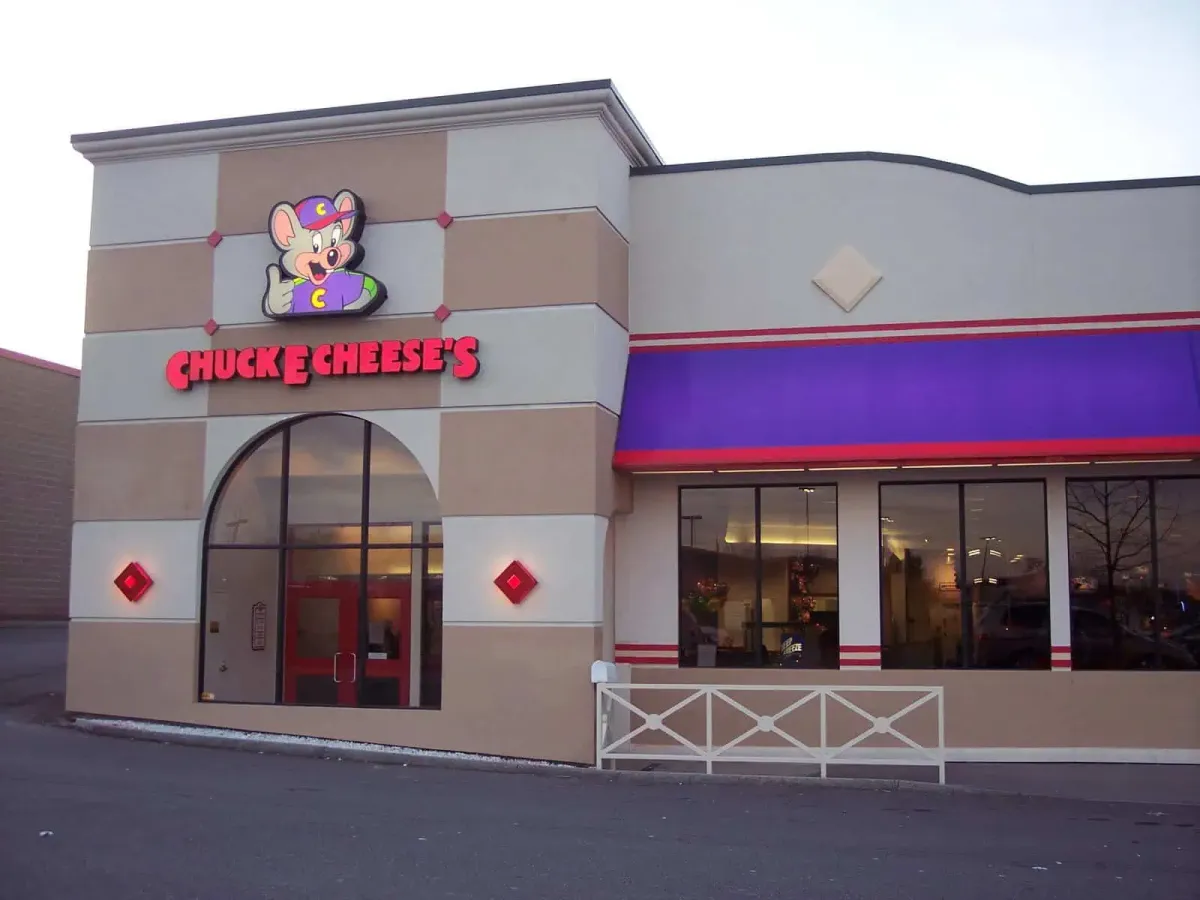 Photo: Chuck E. Cheese, via webcdn.chuckecheese.com
The third phase, and the one that really broke the dial, was social media.
When the Audience Arrived
Instagram launched in 2010. Pinterest followed. Between them, they created a permanent, searchable archive of other people's best moments — including the most elaborately staged children's parties imaginable. Balloon installations. Custom neon signs. Dessert tables arranged like museum exhibits. Hired characters in full costume. Photo booths.
None of these things were new, exactly. Wealthy families had always thrown extravagant parties. The difference was that social media made those extravagant parties visible to everyone, all the time, as a baseline for comparison.
Research on social comparison consistently shows that people benchmark their behavior against what they observe in their social environment. When your feed is full of $2,000 birthday parties, a homemade cake and some balloons can start to feel inadequate — even if rationally you know it isn't.
The birthday party planning industry noticed. Companies offering full-service children's event planning now operate in virtually every major American metro area. Packages can run from a few hundred dollars for basic décor setup to several thousand for a fully managed event with entertainment, custom catering, and professional photography. The American children's party market is now estimated to be worth several billion dollars annually.
What Parents Are Actually Buying
Here's a question worth asking honestly: who is the elaborate birthday party actually for?
Child development researchers have studied this with some consistency. Children under about age seven have limited memory for specific event details. What they remember is emotional texture — did they feel happy, were their friends there, was there cake, did they get to run around? The specifics of the balloon color palette don't register.
Older kids absolutely notice and appreciate a themed party — but they're also remarkably adaptable. Ask adults to recall their favorite childhood birthday memory and a significant number will describe something spontaneous and low-budget: a pillow fort, a backyard water fight, the year it rained and everyone ended up inside watching movies and eating cereal.
The elaborate party, in many cases, is performing for an audience of adults — other parents at the event, followers on social media, and the parent's own internal narrative about what a good parent provides.
None of that is a moral failing. It's a completely human response to social pressure. But it's worth naming.
The Families Pushing Back
There's a quiet counter-movement happening in American parenting circles. A growing number of families are deliberately scaling back — choosing experience-based small gatherings, returning to backyard parties with simple food, setting explicit budget limits on gifts, or skipping the peer-group party entirely in favor of a special outing with just one or two close friends.
Some parents report that these stripped-down celebrations go over better with their kids than the big productions did. Less stimulation overload. More actual playing. Kids who remember the day rather than just the photos from it.
The mid-century birthday party wasn't perfect. But it understood something that got lost in the escalation: the point was never the party. The point was the kid.
A homemade cake and twenty kids running wild in a backyard was enough. For most of them, it was everything.