Your Word Used to Be Your Bond: When Americans Did Business on Trust Alone
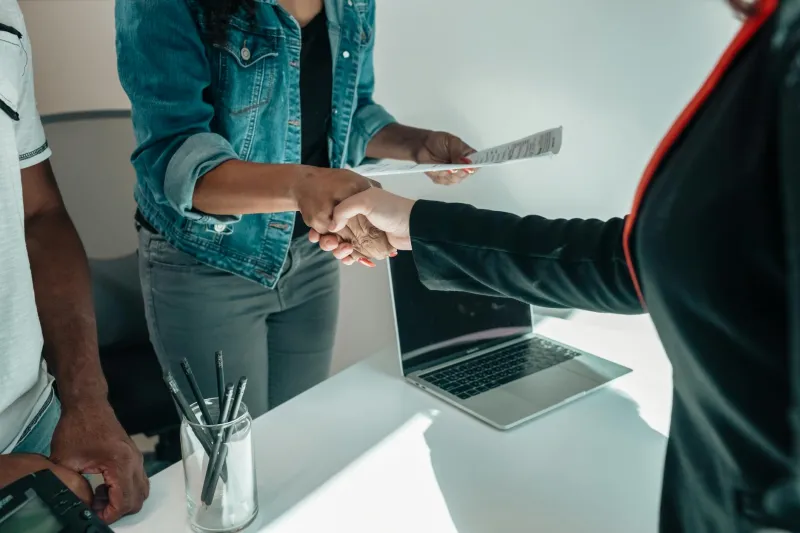
When Your Reputation Was Your Credit Score
In 1955, if you needed a new roof, you'd walk down to Murphy's Hardware, shake hands with old Murphy himself, and he'd have his crew start work Monday morning. Payment? "We'll settle up when the job's done." No contracts, no liability waivers, no three-way calls with insurance companies. Just two people who knew each other's word meant something.
Fast-forward to today, and that same roofing job requires a written estimate, a signed contract, proof of insurance, a permit application, and probably a notarized waiver absolving everyone of everything. What happened to us?
The Neighborhood Economy That Ran on Handshakes
Mid-century America operated on what economists now call "social capital" — the invisible currency of trust, reputation, and community standing. Your local mechanic didn't need a deposit because everyone knew where he lived, where his kids went to school, and that his father had run the same garage before him. Skip out on a bill, and you'd face something worse than collections calls: you'd become persona non grata at the diner, the barbershop, and Sunday service.
This wasn't naive optimism. It was a practical system built on transparency and consequences. In smaller, more stable communities, your reputation followed you everywhere. A handshake deal worked because breaking it meant social exile.
Car purchases happened differently too. You'd visit the local Ford dealer — often the only game in town — and negotiate face-to-face with someone who'd grown up three blocks away. Credit checks? The dealer already knew if you were good for it. He'd seen your father pay his debts and watched you work steady at the mill. Financing was often as simple as "fifty down, fifty a month until it's paid."
When Lawyers Were for Divorces and Wills
Legal paperwork existed, but it was reserved for life's major milestones: buying a house, getting divorced, or writing a will. The average American might interact with a lawyer twice in their lifetime. Contracts were for corporations, not for getting your gutters cleaned or borrowing your neighbor's truck.
Even lending money between friends and family operated on trust. Need $500 to fix your transmission? Your brother-in-law would write you a check, maybe jot down an IOU on a napkin, and expect payment "when you can manage it." The idea that you'd need a formal loan agreement — complete with interest rates and payment schedules — would have seemed absurd, even insulting.
The Great Unraveling: How Trust Became Liability
Several forces conspired to destroy this handshake economy. First, Americans became more mobile. The post-war boom sent families scattering across the country, breaking the community bonds that made reputation-based commerce possible. How could you trust someone's word when you didn't know their history?
Litigation culture emerged in the 1960s and exploded in the following decades. Suddenly, every interaction carried potential legal risk. That friendly handshake could become evidence in a lawsuit. Better to get everything in writing, with multiple signatures and witnesses.
The rise of consumer protection laws, while necessary, also institutionalized distrust. Regulations assumed bad actors lurked everywhere, requiring disclosure statements, cooling-off periods, and formal complaint procedures. These protections helped vulnerable consumers but also sent a clear message: don't trust anyone without paperwork to back it up.
Today's Paper Trail Society
Now we live in what sociologists call a "low-trust society." Every transaction, no matter how small, requires documentation. Hire a babysitter? Sign a liability waiver. Borrow a friend's car? Better check your insurance coverage. Buy a coffee? Accept the terms and conditions on the tablet screen.
We've traded efficiency for security, and spontaneity for protection. Online marketplaces like eBay and Amazon have rebuilt some trust through rating systems and buyer protection, but it's algorithmic trust — mediated by platforms and backed by corporate policies, not personal relationships.
Even family transactions now carry legal weight. Parents create formal contracts with teenage drivers. Siblings draw up partnership agreements for shared vacation homes. The assumption that family bonds guarantee fair dealing has largely disappeared.
What We Lost in Translation
This shift represents more than changing business practices — it reflects a fundamental transformation in how Americans relate to each other. We've become a nation of strangers who assume the worst until proven otherwise.
The handshake economy wasn't perfect. It could exclude newcomers, minorities, and anyone who didn't fit community norms. But it did create powerful incentives for honest dealing and community investment. When your business reputation determined your social standing, you had every reason to treat customers fairly.
The Digital Paradox
Ironically, our hyperconnected age has made us more isolated and suspicious. We can instantly research anyone's background, read reviews, and check references — yet we trust each other less than ever. Information abundance hasn't restored confidence; it's revealed how much can go wrong.
Some entrepreneurs are trying to rebuild trust through technology. Apps that verify identities, blockchain systems that guarantee transactions, and AI that predicts reliability. But these digital solutions miss the point: trust isn't a technical problem. It's a social one.
Can We Ever Go Back?
The handshake economy died for good reasons. Modern America is too complex, too mobile, and too diverse for reputation-based commerce to work at scale. Legal protections have prevented countless frauds and abuses.
But we've lost something irreplaceable: the assumption that most people, most of the time, will do the right thing. Every contract and waiver represents a small admission that we can't trust each other anymore. In trying to protect ourselves from the few bad actors, we've created systems that assume everyone might be one.
The next time you're asked to sign a dozen pages just to get your oil changed, remember: this isn't progress. It's the paperwork trail of a society that forgot how to trust.