The Last Generation to Disappear Until Dinner: How America Stopped Trusting Kids to Be Kids
The Summer of 1982: A Typical Tuesday
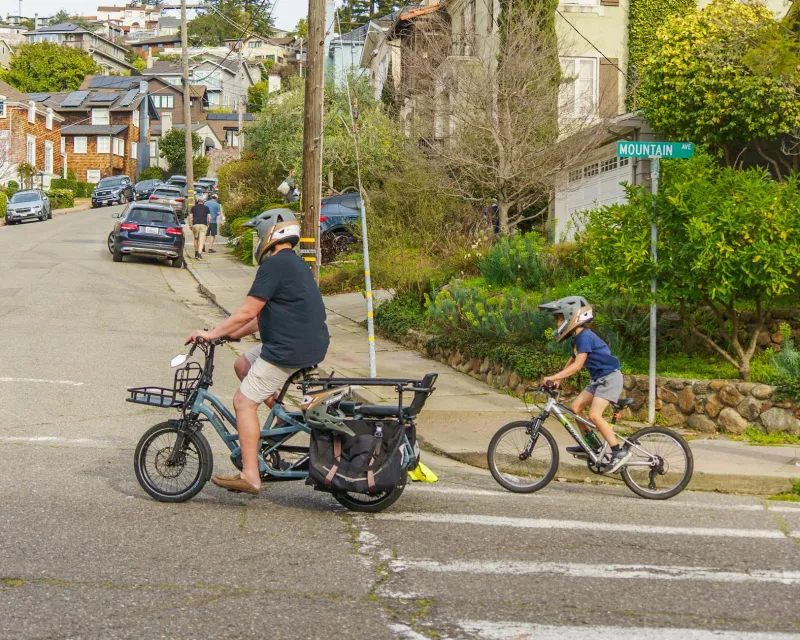
Picture this: It's 9 AM on a Tuesday in July 1982. Eight-year-old Michael grabs his BMX bike, tells his mom he's "going out," and disappears into suburban Cleveland until the streetlights flicker on at dusk. No cell phone. No GPS tracker. No scheduled activities. Just a kid, his bike, and twelve hours of pure freedom.
Michael's day might include: building forts in the woods behind the elementary school, riding to the corner store with loose change for candy, swimming in a neighbor's pool (invitation optional), and maybe catching fireflies in Mason jars as the sun sets. His parents? They're not worried. They're not even thinking about him.
Fast-forward to today, and Michael's own 8-year-old son hasn't spent a single unsupervised hour outside their fenced backyard.
When "Stranger Danger" Became Everywhere Danger
The shift didn't happen overnight. It began in the 1980s when missing children's faces started appearing on milk cartons, making breakfast a daily reminder of lurking threats. The 1981 disappearance of Adam Walsh and subsequent high-profile cases created a media narrative that childhood had become exponentially more dangerous.
The irony? Crime statistics tell a different story. According to FBI data, violent crime against children actually decreased significantly between 1980 and 2020. Yet parental anxiety skyrocketed in the opposite direction.
Television amplified every abduction, every accident, every close call until rare tragedies felt like inevitable outcomes of unsupervised childhood. The 24-hour news cycle needed content, and missing children provided emotionally charged stories that kept viewers glued to screens.
The Liability Revolution
While parents worried about strangers, institutions worried about lawsuits. The 1990s ushered in an era of "better safe than sorry" policies that systematically eliminated childhood independence.
Schools banned walking or biking alone. Playgrounds removed "dangerous" equipment like merry-go-rounds and tall slides. Insurance companies demanded supervision ratios that made spontaneous neighborhood games impossible. Even the corner store became off-limits without adult accompaniment.
What used to be called "common sense" was now labeled "negligent supervision." Parents who let their kids walk to school faced child endangerment charges. The legal system, designed to protect children, began criminalizing the very independence that previous generations considered essential to healthy development.
The Smartphone Leash
Then came the final nail in childhood freedom's coffin: the smartphone. By 2010, parents had the technology to track, contact, and monitor their children 24/7. What started as a safety tool quickly became an electronic umbilical cord.
"Where are you?" "Who are you with?" "Send me a picture." "I'm tracking your location." The constant connectivity that was supposed to enable more freedom instead created more control. Why let your child learn to navigate independently when you can guide them turn-by-turn through an app?
Today's parents can't imagine letting their children experience what they themselves took for granted: the thrill of being unreachable, the confidence that comes from solving problems independently, the simple joy of discovery without documentation.
The Scheduled Childhood
Nature abhors a vacuum, and when unstructured time disappeared, organized activities rushed in to fill the void. Soccer practice, piano lessons, tutoring, art class, coding camp – modern childhood became a series of adult-supervised events designed to maximize development and minimize risk.
The result? Kids who excel at following instructions but struggle with self-direction. Children who can navigate complex video games but get anxious walking two blocks alone. Teenagers who've never experienced genuine solitude or learned to entertain themselves without screens.
What We Gained and Lost
This transformation wasn't entirely negative. Today's children are statistically safer, more closely connected to their parents, and have access to opportunities that previous generations couldn't imagine. They're more aware of real dangers like bullying, abuse, and mental health issues that were often ignored in the "good old days."
But something profound was also lost. The confidence that comes from navigating challenges independently. The creativity sparked by boredom. The social skills developed through unsupervised peer interaction. The resilience built through minor failures and recoveries that no adult witnessed or fixed.
The Ripple Effects
The effects extend far beyond childhood. College counselors report increasing numbers of students who can't function without constant parental guidance. Employers complain about young workers who need excessive supervision and struggle with independent problem-solving.
Mental health professionals point to rising anxiety rates among teenagers who've never learned to self-soothe or cope with uncertainty. The generation that was protected from every possible harm seems less equipped to handle the inevitable challenges of adult life.
A Different Kind of Courage
Today's parents face a dilemma their own parents never encountered: choosing between social expectations and their children's independence. Letting a 10-year-old walk to school alone isn't just a parenting decision – it's a act of rebellion against an entire cultural shift toward risk aversion.
Some families are pushing back. The "Free Range Kids" movement advocates for returning age-appropriate independence to childhood. But they're swimming against a powerful current of institutional policies, social judgment, and technological temptation.
The Long View
Perhaps every generation believes childhood was better "back then." But the speed and completeness of this particular transformation feels unprecedented. In just forty years, American childhood shifted from presumed independence to assumed vulnerability.
Whether future generations will look back on helicopter parenting as protective wisdom or misguided anxiety remains to be seen. What's certain is that the children who once disappeared until dark grew up to create a world where such disappearances are no longer possible – or permissible.
The streetlights still come on at dusk. But the children they once called home are now inside, connected to everything and everyone except, perhaps, their own sense of adventure.