When Your Handwriting Actually Mattered: How America Went from Signatures to Invisible Money
The Art of the Perfect Signature
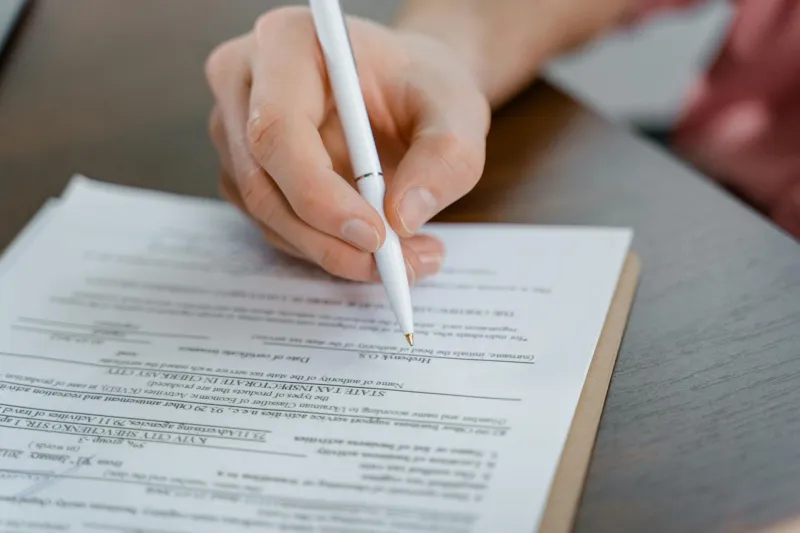
In 1975, teenagers didn't just practice their jump shots or guitar solos—they practiced their signatures. Hours spent perfecting the loops, angles, and flourishes that would represent their identity in every financial transaction for the rest of their lives. Your signature was your brand before anyone knew what personal branding meant.
Bank tellers studied signature cards like art critics examining brushstrokes. They knew the difference between your hurried morning signature and your careful afternoon version. When you wrote a check at the grocery store, the cashier would flip it over, examine your penmanship, and sometimes ask for additional identification if something looked off.
When Every Purchase Required Performance
Buying anything significant involved a small theater of identity verification. You'd pull out your checkbook, write the amount in both numbers and words (God help you if they didn't match), and sign with a flourish while the merchant watched. Credit cards meant carbon paper impressions and careful signature comparisons.
The ritual had weight. Writing a check for a major purchase—a car, furniture, vacation—felt momentous because it required deliberate action. You had to physically write out "Four thousand two hundred and 00/100 dollars," which gave you time to consider whether you really wanted to spend that money.
The Human Network of Financial Trust
Local merchants knew their regular customers' signatures by heart. Mrs. Patterson at the hardware store could spot a forged check from across the counter. The bank teller would notice if your signature looked shaky and ask if you were feeling alright. Financial transactions happened between people who recognized each other.
This personal recognition system created natural fraud protection. It was nearly impossible to use someone else's credit card because merchants expected the signature to match not just the card, but their memory of how that customer usually signed. Identity theft required sophisticated planning because financial identity was tied to physical presence and recognizable behavior.
When Plastic Required Performance
Early credit cards came with elaborate verification rituals. Merchants would slide your card through manual imprinters, creating carbon copies with a satisfying "ka-chunk" sound. They'd check your signature against the card, sometimes holding both up to the light to compare the slants and curves.
For large purchases, they'd call the credit card company for authorization, reading your account number aloud while you waited. The entire process took several minutes and involved multiple people—you, the cashier, the credit card operator, and sometimes a manager for final approval.
The Invisible Revolution
Today's payment systems have made financial identity completely abstract. You can tap your phone against a reader and complete a $500 transaction in two seconds. The payment processor knows your account number, billing address, and purchase history, but the person taking your money knows absolutely nothing about you.
Apple Pay, Google Pay, and contactless cards have eliminated even the pretense of identity verification. Your phone authenticates you through fingerprints or facial recognition, then transmits encrypted payment data that never reveals your actual account information to the merchant.
The Speed of Anonymous Commerce
Modern payment systems prioritize frictionless transactions above all else. Amazon's one-click ordering eliminates every barrier between impulse and purchase. Subscription services automatically charge your card without requiring any conscious action on your part. Buy-now-pay-later services approve purchases instantly based on algorithmic risk assessment.
This efficiency comes at the cost of deliberation. When payments required physical signatures and face-to-face verification, the process naturally included moments for second thoughts. Today's instant transactions eliminate those pause points entirely.
What Fraud Looks Like Now
Identity theft has evolved from crude signature forgery to sophisticated digital manipulation. Criminals don't need to practice your handwriting—they need your social security number, phone number, and enough personal information to convince automated systems they're you.
The protection systems have become simultaneously more sophisticated and more impersonal. Banks use machine learning algorithms to detect suspicious spending patterns, but they've lost the human element that once provided natural fraud protection through personal recognition.
The Psychology of Physical Money
Writing checks and counting cash created psychological friction that helped people understand their spending. The physical act of signing your name to a large purchase carried emotional weight. Handing over a stack of twenties for dinner made the cost tangible in ways that tapping a card simply doesn't.
Behavioral economists have documented how payment methods affect spending behavior. People spend more freely with credit cards than cash, more with contactless payments than chip cards, and most freely with mobile payments that require minimal conscious action.
When Accountability Had a Face
The old system created natural accountability through personal relationships. If you bounced a check at your neighborhood grocery store, you'd have to face the owner the next time you shopped there. Credit card disputes required phone conversations with real people who could access your account history and make judgment calls.
Today's payment disputes happen through automated systems and chat bots. You can file a chargeback claim without ever speaking to a human being. The process is more efficient but completely impersonal.
The Trust We've Automated
Modern payment systems represent a remarkable achievement in distributed trust. Billions of transactions happen daily between strangers who never verify each other's identities, enabled by complex networks of banks, processors, and technology companies.
But we've also lost something valuable: the human-scale trust that developed through repeated personal interactions. When your signature was your bond, financial relationships required ongoing personal credibility. Now they require only functional technology.
The Signature of Our Times
Your signature still technically matters for major purchases like houses and cars, but most Americans sign their names so rarely that their handwriting has deteriorated. Many young adults have never written a check or practiced a signature with any serious intent.
We've traded the personal responsibility of signature-based transactions for the convenience of invisible payments. Money has become increasingly abstract—numbers on screens rather than physical objects or written commitments.
The evolution from signatures to smartphones reflects broader changes in how Americans relate to money, identity, and each other. We've gained unprecedented convenience and lost the tangible connection between our financial choices and our personal accountability. In an age when buying power fits in your pocket and works with a fingerprint, the careful art of the perfect signature feels like a relic from a more deliberate time.